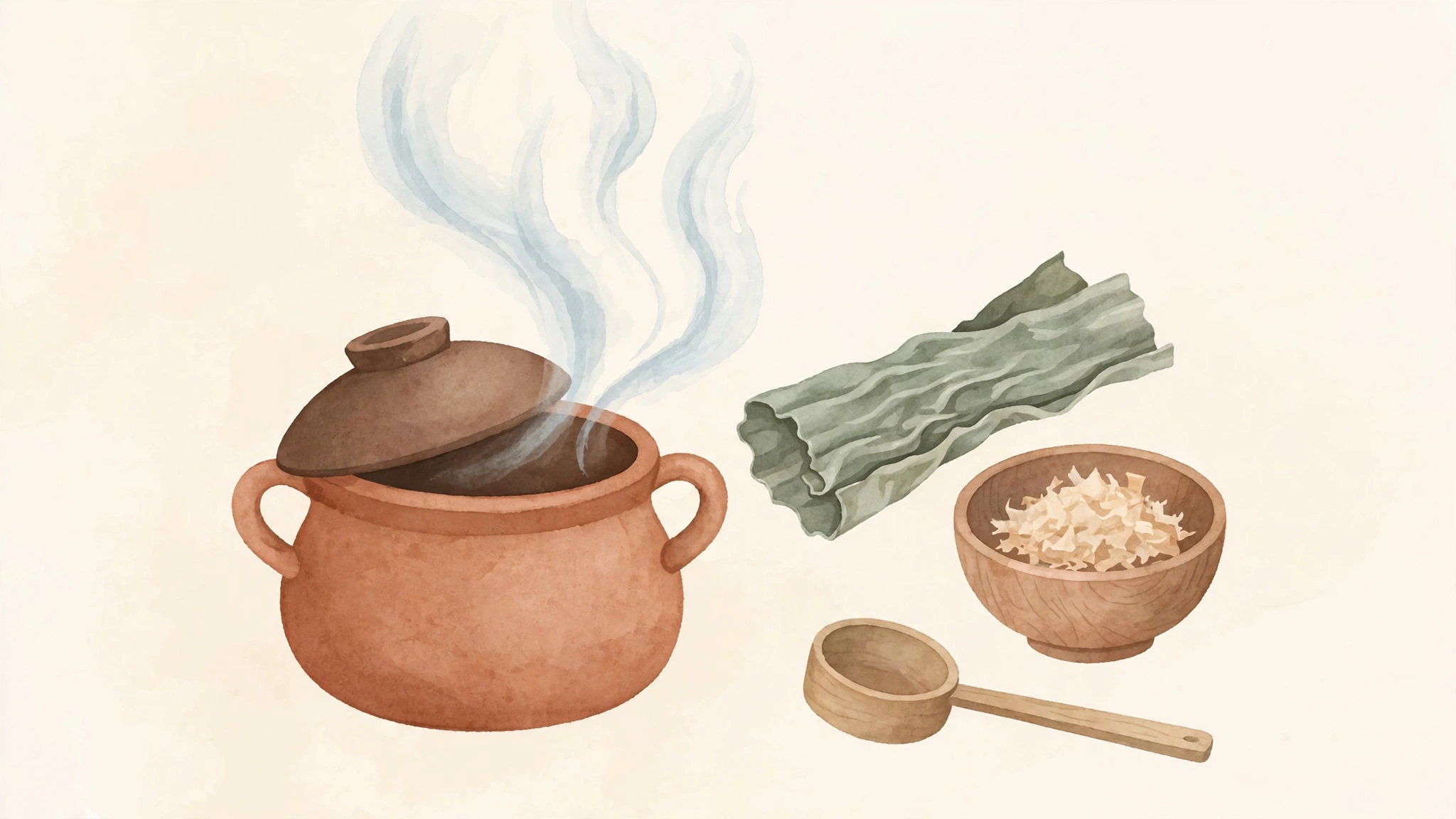
Almost every Japanese home dish you’ve ever loved — miso soup, simmered vegetables, noodle broths, even a simple bowl of clear soup — starts with the same quiet foundation: dashi. It’s not a sauce and it’s barely seasoned. Dashi is a light stock whose only job is to carry umami, the deep savory flavor that makes Japanese food taste complete without tasting heavy.
The good news: real dashi takes about 30 minutes, uses two ingredients, and is much easier than most stock-making you may know from Western cooking. This guide covers what dashi is, the main types, a step-by-step basic recipe, the shortcuts Japanese home cooks actually use, and what to buy (or substitute) if you live outside Japan.
What is dashi, exactly?
Dashi is a clear stock made by extracting umami from ingredients like kombu (dried kelp), katsuobushi (bonito flakes), dried shiitake mushrooms, or small dried sardines. Unlike Western stocks, it is not simmered for hours and contains no salt, fat, or aromatics like onion and herbs. Its flavor comes from natural glutamates (from kombu) and inosinates (from bonito and sardines). When the two meet — glutamate plus inosinate — the umami multiplies. That pairing is the entire secret of the most common dashi, and it’s why a stock that looks like plain water can make a whole meal taste right.
The 5 types of dashi
- Kombu dashi — Made from dried kelp only. Delicate, slightly sweet, fully plant-based. Used for delicate dishes and vegetarian cooking.
- Katsuo dashi — Made from bonito flakes only. More assertively savory and aromatic. Common for noodle soups and simmered dishes.
- Awase dashi — Kombu + bonito combined. The standard all-purpose dashi in most Japanese homes, and the one to learn first. Best for miso soup and everyday cooking.
- Shiitake dashi — Made by soaking dried shiitake mushrooms. Earthy and rich; the soaking liquid from rehydrating dried shiitake is dashi already. A vegan staple.
- Niboshi (iriko) dashi — Made from small dried sardines. Strong, slightly bitter, full-bodied. Traditional for miso soup in many regions and for hearty noodle broths.
You may also see the words ichiban dashi (first stock — the clean, refined first extraction, used for clear soups) and niban dashi (second stock — made by re-steeping the same kombu and flakes, lighter, used for miso soup and simmered dishes). At home, one batch of awase dashi covers almost everything.
How to make awase dashi (the basic recipe)
Makes about 4 cups (1 liter) — enough for miso soup for 4.
Ingredients:
- 4 cups + a little extra (1 L) water
- 10 g (about a 4-inch / 10 cm piece) kombu
- 20 g (about 1 packed cup) katsuobushi (bonito flakes)
Steps:
- Soak the kombu. Wipe the kombu lightly with a damp cloth if it’s dusty — don’t wash off the white powder on the surface; that’s umami. Put it in the water and soak for at least 30 minutes. If you have time, soaking overnight in the fridge gives the fullest flavor with zero effort.
- Heat gently, remove the kombu. Heat the pot over medium heat. Just before the water boils — around 140–150°F (60–65°C), when small bubbles gather at the edges — take the kombu out. Boiling kombu makes the stock bitter and slimy, so this is the one step that matters.
- Add the bonito. Bring the water up to a bare simmer (about 185°F / 85°C), turn off the heat, and add all the bonito flakes at once. Let them sink and steep for 30 seconds to 1 minute. Don’t stir and don’t boil — boiling clouds the stock and pulls out harsh flavors.
- Strain. Pour through a fine strainer or paper towel-lined sieve. Let it drip; don’t squeeze the flakes hard, or the stock turns cloudy and fishy.
- Use or store. Fresh dashi keeps 2–3 days in the fridge. For longer storage, freeze it in an ice cube tray and keep the cubes in a bag — they’re perfect for dropping into small dishes.
Kombu-only dashi (vegan)
Use the same method, minus the bonito: soak 10 g kombu in 1 L water (overnight is best), heat gently, and remove the kombu just before boiling. For a richer vegan stock, combine kombu with dried shiitake soaking liquid — the two plant umami sources reinforce each other the same way kombu and bonito do.
The honest shortcuts (Japanese home cooks use them too)
- Dashi packs — Tea-bag-style packets of ground bonito, kombu, and sometimes sardine or shiitake. Simmer one pack in 2 cups of water for 2–3 minutes. This is the closest thing to homemade and what many busy households in Japan rely on.
- Granules (e.g., hon-dashi) — Instant powder dissolved in hot water, roughly 1 teaspoon per 1⅔ cups (400 ml) of water — check your package. Fast and consistent; the flavor is a step below fresh, but for a weeknight miso soup it absolutely does the job.
- Concentrated liquid (mentsuyu style) — Bottled concentrates are pre-seasoned with soy sauce and mirin, so they’re for noodle dips and simmered dishes, not a plain dashi replacement.
If you live outside Japan: buying & substitutes
- Kombu, bonito flakes, dried shiitake, and dashi packs are stocked by most Asian grocery stores and widely available online. Look for kombu labeled dashi kombu (thicker, for stock).
- No bonito flakes? A dashi pack or granules are the practical substitute. For a vegan option, dried shiitake + kombu needs no substitute at all.
- Avoid replacing dashi with Western chicken or vegetable stock in clear soups — the flavor profile is different and the dish will taste “off” in a way that’s hard to fix. For simmered dishes in a pinch, a light, unsalted stock plus a splash of soy sauce gets you closer than nothing.
How to use your dashi
- Miso soup: The classic ratio is about 3–4 tablespoons of miso paste for 4 cups (about 800 ml after ingredients) of dashi. Always dissolve the miso at the end, off the boil. (Full method in our miso soup guide — coming next in this series.)
- Clear soup (suimono): Season 4 cups of ichiban-style dashi with about 1 teaspoon salt and 1 teaspoon light soy sauce. That’s it — the dashi does the work.
- Simmered vegetables (nimono): Dashi plus soy sauce, mirin, and a little sugar is the base formula for most Japanese simmered dishes.
FAQ
- Why can’t I boil the kombu? High heat draws out bitterness and a slimy texture. Gentle heat below boiling extracts the glutamates cleanly.
- Can I reuse the kombu and flakes? Yes — that’s niban dashi (second stock). Simmer them in fresh water for a lighter stock for miso soup. The spent kombu can also be sliced and simmered in soy sauce and mirin as a small side dish, so nothing goes to waste.
- Is dashi gluten-free? Homemade dashi from kombu, bonito, or shiitake is naturally gluten-free. For granules and packs, check the label, as some products include wheat-derived ingredients or soy sauce.
- How is dashi different from broth cubes? Dashi is unsalted and unseasoned on purpose — it’s an umami base you season per dish, not a finished soup.
The bottom line
Dashi looks like flavored water and behaves like the foundation of an entire cuisine. Learn the kombu-plus-bonito version once, keep dashi packs in the cupboard for busy days, and miso soup, simmered dishes, and noodle soups all become weeknight food. Next in this series: miso soup — and the one rule (never boil the miso) that changes everything.